31 January 2016

Part 2 Project 1 Joining Exercise 3 Joining curved edges


Exercise 3 Joining curved edges

Painted tissue joined to either side of silk paper by washi tape


corrugated card joined by stitches


Dried orange slices joined by knotted thread


Dried orange slices cut in half joined by stitching through edges whilst stacking side by side


Dried orange slices cut in half joined by stitching through edges whilst stacking side by side

Dried orange slices cut in half joined by stitching through edges whilst stacking side by side

Cut kitchen roll card joined by threading wool yarn through each section


          Cut kitchen roll card joined by threading wool yarn through each section


Dried leaves joined with strips of washi tape


Painted canvas with centre cut out and dried leaf joined by stitching with fine cotton thread

Painted canvas with centre cut out and dried leaf joined by stitching with fine cotton thread


Painted paper section cut out with strip of painted canvas joined at intervals by pieces of silk thread threaded and knotted


Painted paper holes cut out with pieces of stitched textile joined by stitching with silk thread


Painted paper holes cut out with pieces of stitched textile joined by stitching with silk thread

Painted paper holes cut out with pieces of stitched textile joined by stitching with silk thread

Part 2 Project 1 Joining Exercise 2 Joining straight edges with a gap


Exercise 2 Joining straight edges with a gap


Painted silk noil fabric joined by washi tape lace strip applied to washi tape


Tissue paper joined by thread wrapped around brads


Painted paper and canvas joined by wire


Painted canvas joined by linen thread


                               Painted canvas joined by linen thread


Painted canvas joined by linen thread

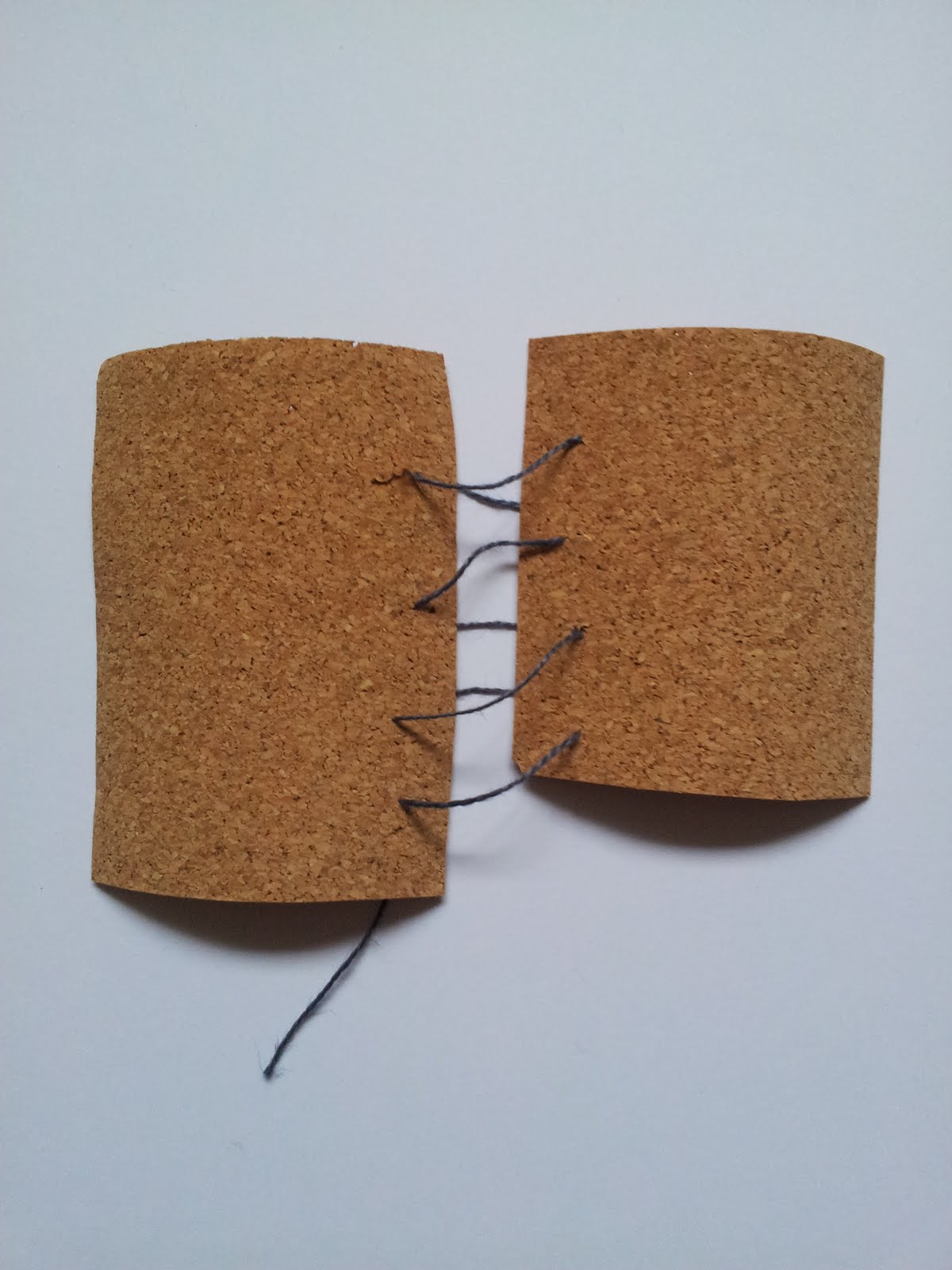
Modelling cork joined by insertion stitches with linen thread


                        Modelling cork joined by stitches with linen thread


Painted tissue heat bonded to Tyvek joined by stitches with metallic flowers threaded across join

Part 2 Project 1 Joining Exercise 1 Joining straight flush edges


Exercise 1 Joining straight flush edges


Paper joined with washi tape


Torn crushed brown paper joined to card by stitching with thread


Torn crushed brown paper joined to card by stitching with thread


Painted greaseproof paper joined with metal rings used in book making


Rag paper joined by stitching with linen thread


Torn tissue paper joined by stitching with linen thread


Card joined with washi tape


Card joined with washi tape


27 January 2016

Part 2 Joining and Wrapping - Research

Alice Fox

Alice Fox is an artist that records and collects from the landscape.  I like her work because she makes collections from nature picking up items that may often be overlooked.  I like the idea of looking more at the landscape to for inspiration. 

Alice works with natural fibres and natural dye techniques.  Leaf stitching is an ongoing exploration of stitching found items  Many of the pieces have a very short life span and a record of them is kept by photographing the pieces.  I like the leaf stitching because the joined and overlapped edges make a variety of patterns and because the thread stands out against the leaves giving more texture.

The colours of some of the leaves are lovely rich autumnal colours.  I particularly like these sort of colours because I like the rusts and browns which can sometimes have a hint of red and I like the hints of yellow especially the yellow ochre shade that adds by giving light to the richness. 

I like the fact that Alice Fox takes something from the landscape that is going to die away quite naturally giving it another lease of life by joining and stitching the leaves together.  By photographing them she is able to keep a permanent record of the fragile art work she has created.

Alice Fox Leaf Stitching eucalyptus triple row


Alice Fox Leaf Stitching Eucalyptus circle


Alice Fox leaf stitching work in progress


Pippa Andrews

Pippa Andrews makes structures from organic and architectural forms.  She has worked with paper sing beadweaving techniques to join.  She has also used basket making methods in her work.  She has made vessels by using coiled pine needles to join together needle felted sections.

Although Pippa Andrews makes art for walls and jewellery it is her 3D pieces that I like in particular.  I like the methods she uses for joining materials because the method enables her to make interesting shapes that are sturdy and robust as well as the pieces having very textured look. 

I particularly like the vessels that are made using basket making methods and have an outer shell of felt part way up them.  I like that the stitches used to join the materials are quite widely spaced and that they become a strong contrast of thread against the main material.


Judith Scott

Judith Scott was a visual artist that worked by wrapping work with lengths of knotted cloth and yarn.  Within the core of her pieces there might be hidden a special talisman which the significance of which was only known to Judith. 

I read Judith Scott's story with sadness and wonder.  She had been separated from her twin sister at the age of 7 as her parents were under pressure to have her taken away because it was practically unheard of for children with severe disabilities to live with their parents.  Years later her sister sought her out and Judith was enrolled at an art centre to occupy some of her time.  After a fibre arts workshop she began wrapping pieces of wood in fibre, fabric and threads.  From then on she constantly created and made over 200 mixed media sculptures.  Many of her pieces are in international museums and private collections.

When I first saw Judith Scott's work I was not keen on it at all and thought it cumbersome.  I think the size and the misshapen effect of her work may have been the reason for this.  I do tend to be attracted to smaller pieces of work. However, as I looked at more work and read about her life I could see how there must have been something in Judith and this was her way of expressing it.  I admire how free her work is and how colourful the pieces are.  When I studied them more I could see so much more going on and I can see that I need to take time and look more closely and not be dismissive because I do not find a piece interesting at first.  This does not mean that I really like the pieces as a whole.  I like aspects of them such as the colours and parts of the wrappings because of the texture that has been achieved.  I do like the idea of something of special significance being hidden inside.

Judith Scott


Barbara Cotterell

Barbara Cotteress is a mixed media textile artis.  She uses recyled materials as a preferred medium and likes pattern in her work.


References

Leaf Stitching Euculyptus Alice Fox. (2015). [image] Available at: http://www.alicefox.co.uk/wp-content/uploads/Alice-Fox-Leaf-Stitching-eucalyptus-triple-row.jpg [Accessed 5 Nov. 2015].

Alice Fox Leaf Stitching Eucalyptus circle. (2015). [image] Available at: http://www.alicefox.co.uk/wp-content/uploads/Alice-Fox-Leaf-Stitching-Eucalyptus-circle.jpg [Accessed 5 Nov. 2015].

Alice Fox Leaf Stitching work in progress. (2015). [image] Available at: http://www.alicefox.co.uk/wp-content/uploads/Alice-Fox-leaf-stitching-work-in-progress.jpg [Accessed 5 Nov. 2015].

Pippaandrews.com, (2015). Pippa Andrews - Textile Art. [online] Available at: http://www.pippaandrews.com/ [Accessed 7 Dec. 2015].

Pippa Andrews. (2015). [image] Available at: http://www.pippaandrews.com/USERIMAGES/IMG_0104.JPG [Accessed 7 Dec. 2015].

Pippa Andrews Standard droplet orange. (2015). [image] Available at: http://www.pippaandrews.com/USERIMAGES/standard%20droplet%20orangeIMG_1542.jpg [Accessed 7 Dec. 2015].

Pippa Andrew. (2015). [image] Available at: http://www.pippaandrews.com/USERIMAGES/DSCN0351.JPG [Accessed 7 Dec. 2015].

Pippa Andrews Pine needle vessels. (2016). [image] Available at: http://www.materialspace.com/USERIMAGES/thumb_pineneedlevesselsPippaforwebMG_0857%20copy.jpg [Accessed 24 Jan. 2016].

Anon, (2015). [image] Available at: Judith Scott wrapped textile. (2015). [image] Available at: http://judithandjoycescott.com/images/sculptures/lg/images.jpg [Accessed 7 Dec. 2015]. [Accessed 7 Dec. 2015].

Anon, (2015). [image] Available at: http://judithandjoycescott.com/images/sculptures/lg/enlarge04.jpg [Accessed 7 Dec. 2015].

Karola Pezzarro - Figures. (2015). [image] Available at: http://www.karolapezarro.nl/pieces/pieces%201.jpg [Accessed 7 Dec. 2015].

Karola Pezzarro - Figures. (2015). [image] Available at: http://www.karolapezarro.nl/pieces/pieces%201.jpg [Accessed 7 Dec. 2015].

Lens (detail). (2015). [image] Available at: http://www.materialspace.com/USERIMAGES/barbaraforweblens.jpg [Accessed 7 Dec. 2015].

Deeply foiled. (2015). [image] Available at: http://www.materialspace.com/USERIMAGES/deeply%20foiled%20barbara%20cotterell101211%20258.jpg [Accessed 7 Dec. 2015].

23 January 2016

Reflection on Feedback Assignment One

I feel pleased with the feedback I received from my tutor for Assigment One.  It was very positive and has given me points to think about and improve upon so that I can take these through to the rest of the course.

Demonstration of technical and visual skills, quality of outcome, demonstration of creativity

My tutor commented that  had created a good body of samples in a range of materials and colours.  She suggested that I return to this section of the course at times during my studies to investigate further.  She also suggested that I may wish to return to the samples in embossing and puncturing when I reach the printing section of the course.  I shall do this as I think they were successful and I can begin to think ahead on how to use these in printing.

I was pleased to read that my tutor agreed some techniques can be more stimulating than others and that I should listen to this and allow what I enjoy and find interesting to guide me.

It was suggested that I continue to be experimental and take risks which could be by adapting a method using new material or something unusual.  This sometimes overwhelms me as I do worry that I am maybe not being as free and experimental as I should or could be so it was reassuring to see that my tutor had said don't try and do everything and that ideas for the future can be recorded if I don't have time to follow them now.  I am therefore starting to make notes in my sketchbook when I think of an idea or perhaps something I have seen that I would quite like to follow up.  These are only short notes and lists but I know will be useful to me.

I somehow missed out the sorting stage of the assignment.  I shall be returning to this and picking out the samples I think worked best.  My tutor suggested collecting images of them together on my blog and write about why they were successful.  Missing something like this is unusual for me as I am very organised and do go through the course work to ensure I have covered all that is required.  I will make sure in future assignments this is checked thoroughly.

Sketchbooks
Demonstration of technical and visual skills demonstration of creativity

I am pleased that my tutor does not have any particular concerns about my drawing.  She said there is no need to have to accurately represent a sample but translate something about it.  This is reassuring to me and I will continue to try to draw freely and spontaneously.  My tutor suggested blind continuous line drawing and I shall do this in my next assignment.  She also suggested looking at drawing tutorials on  YouTube and a book which is reviewed on Weareoca.   

Research
Context, reflective thinking, critical thinking, analysis

I did worry about whether the research I had done was correct.  I did find it difficult to write about why I did or did not like an artist's work. My tutor suggested that I be more specific in what I think about the work I look at.  She gave me an example of how in Richard Sweeney's work I could have sad something about how essential the use of light is to see the surface he makes and how does the lack of colour in his work enhance the effectiveness.  She said there are no right or wrong answers which I find reassuring as I am always concerned about not getting things wrong.  I know I have to ask more questions about what I see.  I now realise that I don't just have to say I like something but ask myself why and then ask even more questions as to why.  This is going to be difficult for me but I think a very good and interesting exercise.  My tutor suggested reading the review on the book Critical Thinking Skills by Stella Cottrell on Wearoca and What is Research?  I did this and have purchased the book which I am finding an interesting and very useful addition to my books as I think it will help me to put my thoughts into a much more logical order and help me to achieve more skills in critical thinking.  

Learning Blog
Context, reflective thinking. critical thinking, analysis

It was good to know that my tutor considers my learning log is well organised and easy to navigate.  When setting up my blog a big concern was that it would be easy to navigate and that it would be clear where each set of work and writing for the assignments were.  My tutor suggested that I use the suggestions from the feedback on the research section to expand my writing and therefore my thinking in relation to my own work and that of others.  I understand that writing critically is something that should be done on a regular basis to develop the skills needed to improve the language and deepen understanding of what I am looking at.  As with other areas of study it is something that needs practise in order to improve and I am determined to do this as I know I am only at the beginnings of these skills.

My tutor suggested looking at another student's blog who is also studying Mixed Media for Textiles.  I have done this and I can see that this can be useful as it is difficult when students do not meet regularly to bounce ideas off each other.  I do find, however, that when I look at other students' blogs I start to feel overwhelmed and a little insecure in my work.  I start to think things like I have not done enough work or my work is not as good a standard as others.  I know I have to realise that each has a style of their own and also that everyone's circumstances are different allowing for more work at any given time.  I hope that as I work through the course I develop more confidence in my own work.

My tutor gave me pointers for my next assignment. This is a really good list for me to refer to and follow during my assignment as a reminder of what I need to do.  Overall the feedback I have received has given me confidence to move on and reassured me on areas I have been unsure about.


30 October 2015

Assignment One Reflection

At the beginning of this first section of the course I decided to pick out a couple of exercises from each of the projects except for those in Project 3 Heating and Fusing. The reason for this was because although I would have liked to try these exercises I do not at the moment have adequate facilities to work these in a well ventilated place.  This is something I will come back to.

I found the folding and crumpling exercises interesting because in the first instance I thought I would not get much work and inspiration from them.  After initially folding paper I was inspired to start looking around for other materials to fold and found that by using the different materials I started to look at the material in a different way.  I started to look at how I thought it would behave dependent on how I treated it and was both pleased and surprised with the results.   

Working through the projects the way I looked at materials continued to change and I found I would experiment more.  I do think that perhaps I could have experimented with a more varied choice of materials in some of the projects but I tended to use what I had to hand.  I have found though that since doing the exercises when I see different papers and fabrics I am beginning to wonder how they would behave if I folded or sewed them in a certain way so I feel that this has been a success for me.

I think I could have taken some of the exercises further especially the puncturing and stitching exercises.  I will take what I have learnt from these exercises I did into my future work and hopefully will develop the techniques further.  I did find that I was conscious of how much time I was spending on a particular exercise and how little time on another one.  Obviously this was because I was not as inspired with a particular exercise for example the cutting exercises.  I think I restricted myself too much with my materials and should have persevered.  This is something I am going to address in the future so that I can take a technique further.  I find it hard to know when I have done enough on a particular exercise.

One area I was unsure of was how to present and label the samples.  Some lent themselves to being attached to A3 sheets.  Some could not be treated this way.  I think that sometimes I was conscious of this and it inhibited the way I worked a sample.  I will in future try to work more freely and not put obstacles in the way of working so that I get more from my experimentation.

I have struggled with my sketchbook work and have looked at textile artists sketchbooks to get inspiration.  I have made myself a plan which includes working daily in my book for at least ten minutes and not to worry about whether what I am doing is right or wrong.


Sketchbook


Below are pages from my sketchbook.  I have to admit I am struggling with keeping a sketchbook.  This was one part of the course I was particularly keen to keep working on and to improve upon.  However, I am finding that I am disorganised with regard to this.  I am by nature a very organised person and so am very frustrated about this.  I find it hard to know what to work on in my sketchbook.  I know that I should record anything that inspires me.  I was determined to work for at least 10 minutes a day in my sketchbook but in reality I have been avoiding doing this.  I think it is one of those situations that the more I think about it the less likely I am to actually do anything about it.  I know I am worrying too much about what to do in the book.  I find when I do start to work in it there are so many choices as to which materials to use and then how should I record things large or small.  I realise I should really just work through as many as I can so that I see where it leads.  I keep telling myself this but am feeling quite uptight about sketchbook work.  

After reading the books The Found Object in Textile Art by Cas Holmes and Creating Sketchbooks for Embroiderers and Textile Artists by Kay Greenlees I have decided on a plan and that is to set aside a certain amount of time each day or at least 5 days a week to work in my sketchbook.  I am going to use inspiration that I find around me either when out walking or visiting somewhere and from the books and magazines that I have.  I will carry my camera everywhere.  I will use different materials each time although I do have favourites that I am sure I will continue to use each time.  One big realisation for me is that I think it is the word 'sketchbook' that is putting me off and I have decided that mentally I must call this my ideas book.

I am also going to as many exhibitions as I can and hoping to take inspiration from any sketchbooks that are there.  It is good to see how other people collect their ideas together.  I visited an exhibition last week by Cheshire Textiles who are a small group of contemporary textiles artists.  The artists had a few of their sketchbooks alongside their final pieces and I found them very inspiring.  I am blogging about this exhibition in a separate page. 


References

Holmes, C. (2010). The found object in textile art. Loveland, Colo.: Interweave Press.
Greenlees, K. (2005). Creating sketchbooks for embroiderers and textile artists. London: Batsford.